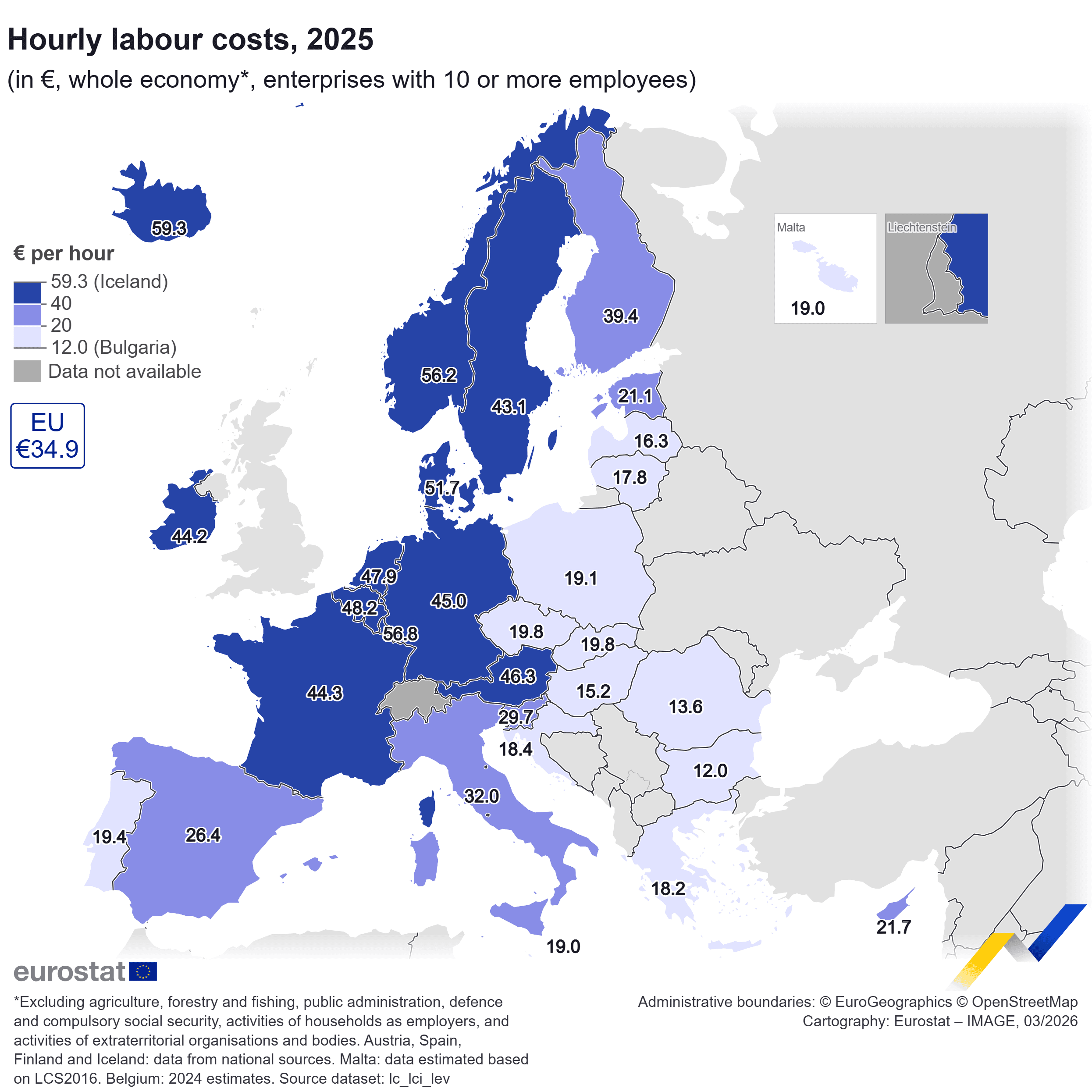
Hourly labor costs in the EU in 2025 ranged from 12 to 57 euros
In 2025, average hourly labour costs in the whole economy were estimated at €34.9 in the EU and €38.2 in the euro area, representing an increase from €33.5 and €36.8, respectively, in 2024.

In 2025, average hourly labour costs in the whole economy were estimated at €34.9 in the EU and €38.2 in the euro area, representing an increase from €33.5 and €36.8 respectively in 2024.
These data come from Eurostat estimates on labour cost levels. The key findings are presented below:
Lowest labour costs in Bulgaria, highest in Luxembourg
There were substantial differences in average hourly labour costs among EU countries. The lowest were recorded in:
Bulgaria (€12.0)
Romania (€13.6)
Hungary (€15.2)
The highest costs were recorded in:
Iceland (€59.3)
Luxembourg (€56.8)
Norway (€56.2)
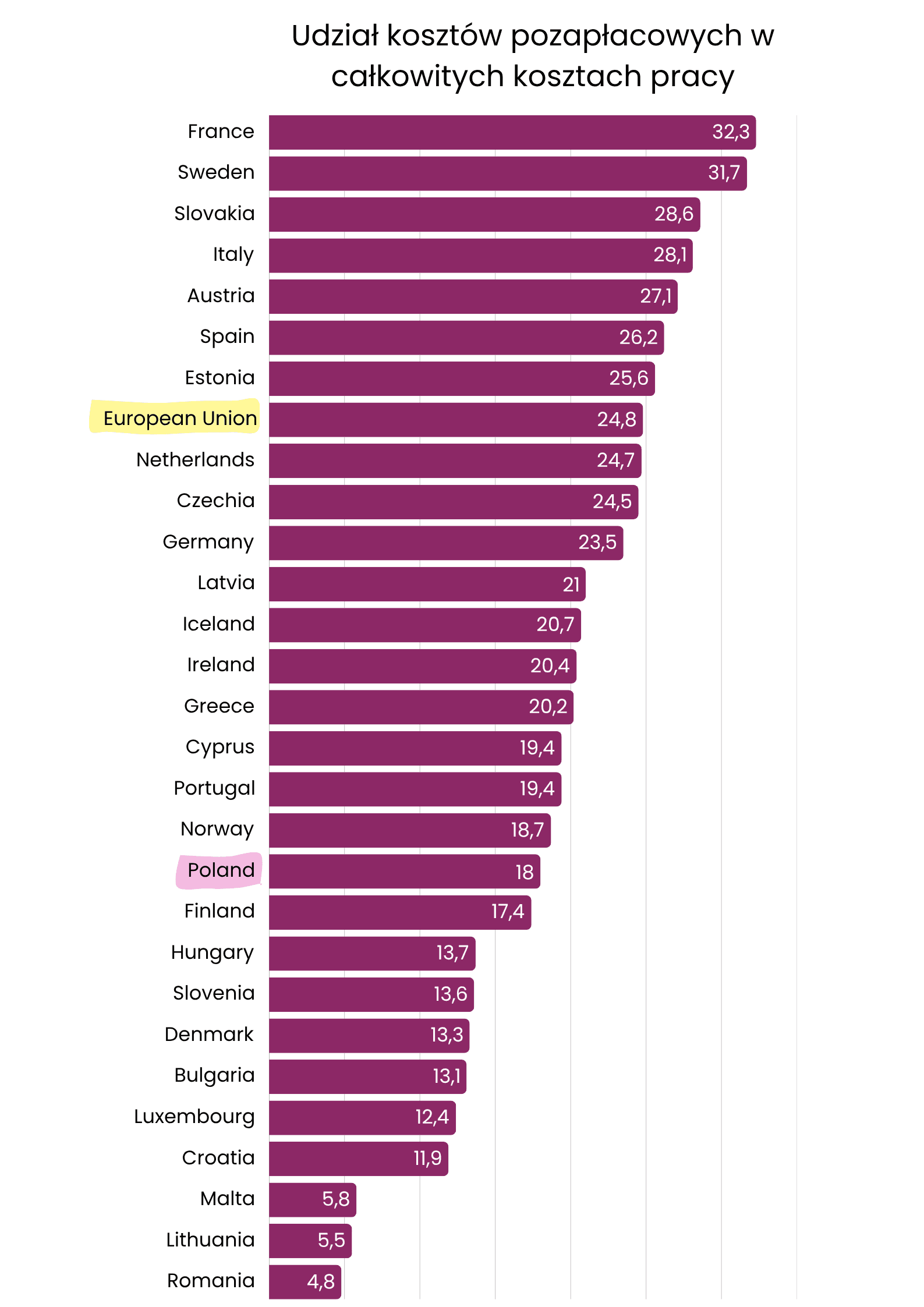
The two main components of labour costs are wages and salaries and non-wage costs (e.g. social security contributions paid by employers). The share of non-wage costs in total labour costs was 24.8% in the EU and 25.6% in the euro area. The lowest share of these costs was recorded in Romania (4.8%), Lithuania (5.5%) and Malta (5.8%), and the highest in France (32.3%), Sweden (31.7%) and Slovakia (28.6%).
Hourly labour costs increased by 4.1% in the EU in 2025
In 2025, hourly labour costs in the whole economy expressed in euro increased by 4.1% in the EU and by 3.8% in the euro area compared with 2024.
Within the euro area, costs increased in all countries except Malta (-0.5%). The largest increases were recorded in:
Bulgaria (+13.1%)
Croatia (+11.6%)
Slovenia (+9.3%)
Lithuania (+9.2%)
The lowest increases were recorded in France (+2.0%) and Italy (+3.2%).
Situation in countries outside the euro area (including Poland)
For EU countries that are not members of the euro area, hourly labour costs expressed in national currency increased in all countries. The largest increases were recorded in:
Romania (+10.6%)
Hungary (+8.9%)
Poland (+8.8%)
The smallest increase was recorded in Denmark (+3.0%).
Methodological notes:
The data concern enterprises employing 10 or more workers.
“Whole economy” includes almost all types of activities, excluding agriculture, public administration, and households as employers.
Total labour costs include gross wages and salaries and non-wage costs minus subsidies.